
10 Essential Medicines Every Indian Home Should Keep
October 17, 2026 · admin
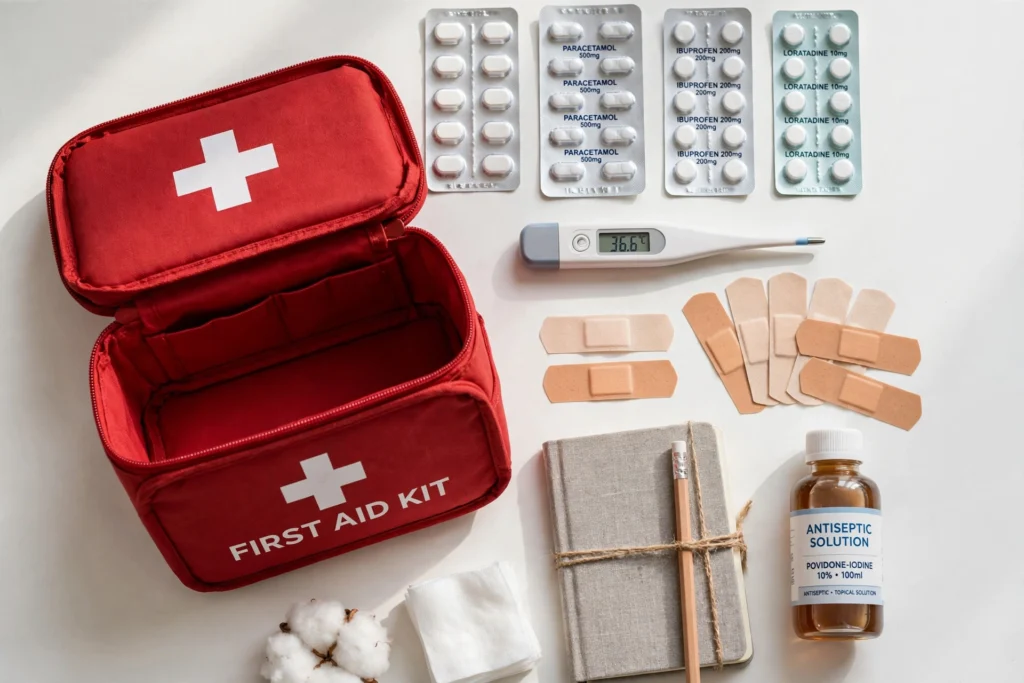
Every Indian household should keep a small stock of essential medicines for common health issues — fever, pain, acidity, allergies, minor wounds. A well-prepared home medicine box can save you a late-night trip to the pharmacy and help you act quickly in minor emergencies.
Here are 10 essentials our pharmacists at Laxminagar Medical Hall recommend:
1. Paracetamol (500 mg / 650 mg)
The most basic medicine for fever and mild pain. Keep a strip of 15 tablets. Always check the expiry date and never exceed the recommended dose.
2. Oral Rehydration Salts (ORS)
Essential for dehydration caused by diarrhoea, vomiting, or heat. Dissolve one sachet in one litre of clean drinking water.
3. Antacid Tablets or Syrup
For acidity, heartburn, and indigestion after heavy meals. Chewable antacid tablets work fast and are easy to store.
4. Anti-allergic Tablets (Cetirizine)
Useful for seasonal allergies, dust allergy, itching, and mild skin rashes. One tablet a day is usually enough for adults.
5. Pain Relief Gel or Spray
For muscle pain, sprains, and backaches. A topical gel gives quick relief without the side effects of oral painkillers.
6. Antiseptic Liquid and Bandages
Clean minor cuts and wounds immediately with antiseptic, then cover with a sterile bandage. Keep adhesive bandages in multiple sizes.
7. Thermometer
A digital thermometer helps you track fever accurately before deciding whether a doctor’s visit is needed.
8. Cough Syrup (for Dry and Wet Cough)
Keep a basic cough reliever, but note that persistent coughs lasting more than a week need medical attention.
9. Electrolyte / Glucose Powder
Helpful during weakness, low energy, or recovery from illness — especially useful for children and elderly family members.
10. Prescribed Medicines (Your Family’s Regular Ones)
If anyone in the family takes daily medicines for BP, diabetes, or thyroid, always keep a 7-day buffer stock so you never run out.
Storage Tips
- Store medicines in a cool, dry place away from direct sunlight.
- Keep them out of children’s reach — ideally in a locked box.
- Check expiry dates every 3 months and discard expired medicines safely.
- Never share prescription medicines with others.
Disclaimer: This article is for general information only and is not a substitute for professional medical advice. Always consult a doctor or pharmacist before starting any medicine.
0 Reviews